What the Police Allege
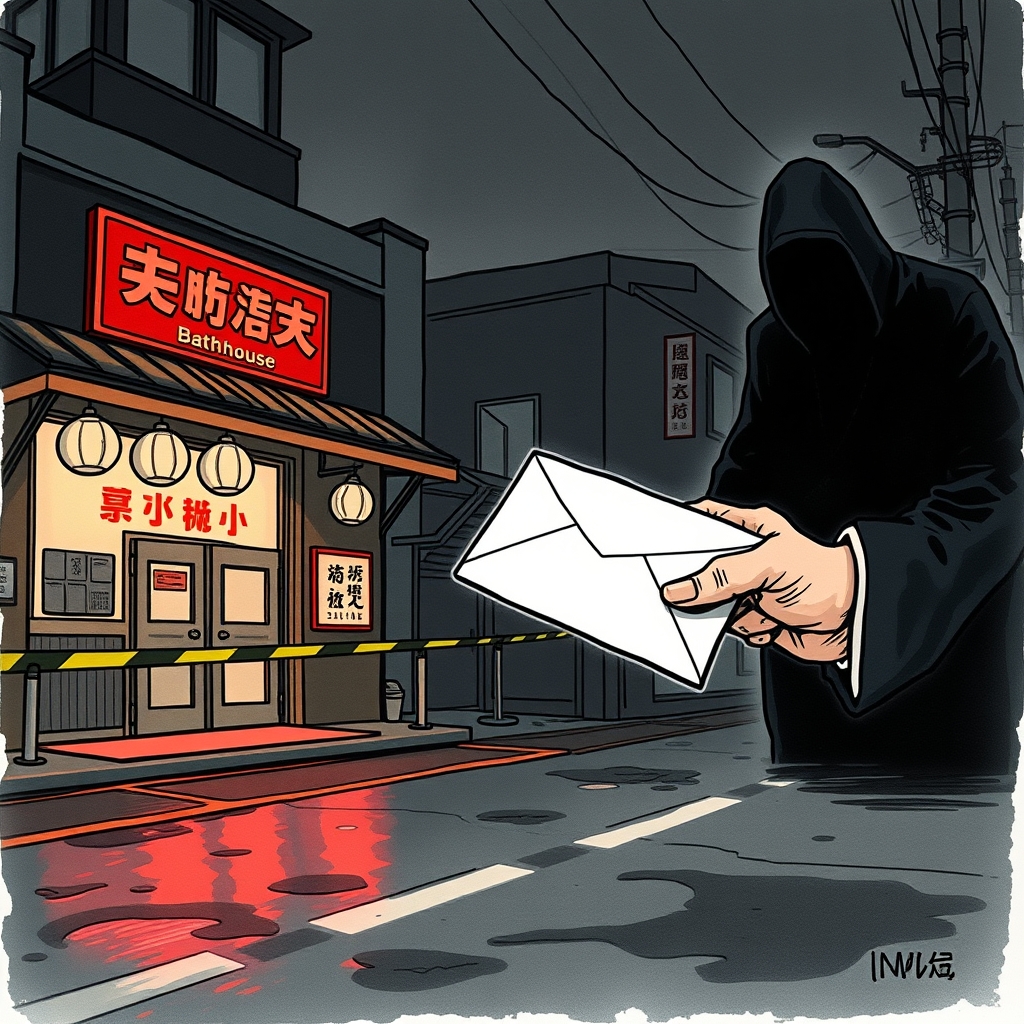
Miyagi Prefectural Police have arrested three men over a soapland in the heart of Sendai, accusing them of running the shop as a venue for prostitution and pointing to the possibility that some of its proceeds were funneled to an organized-crime group.
According to reporting on June 25 and 26 by TBC Tohoku Broadcasting, Sendai Broadcasting (FNN), and Miyagi Television (NNN), distributed in part via Yahoo! News Japan, the three were arrested on suspicion of violating the Anti-Prostitution Act (baishun boshi-ho)—specifically the offense of running a business that "provides a place" for prostitution. The establishment, a soapland named "Marine Chihime," operated in Ichibancho, Aoba Ward, in central Sendai.
Investigators identify the three as an officer of the company that ran the shop (44), its then-manager (48), and an employee who served as an on-site supervisor (39). Police say the men conspired to knowingly let the shop's female employees engage in prostitution with unspecified male customers, furnishing the establishment's rooms as the venue. According to the reporting, all three have acknowledged the allegations.
A Month That Drew ¥40 Million
The arrest warrant covers a narrow window—January 1 through 28, 2026—but the figures police attach to that single month are substantial. Investigators say the shop had roughly 200 women on its roster and took in approximately ¥40 million in sales over the 28-day period. Authorities say the establishment has since closed; reporting indicates a notice of business closure was filed after police searched the premises.
| Detail | As reported |
|---|---|
| Establishment | "Marine Chihime" soapland, Ichibancho, Aoba Ward, Sendai |
| Arrested | Operating-company officer (44), then-manager (48), on-site supervisor (39) |
| Charge | Anti-Prostitution Act — "providing a place" as a business |
| Alleged period | January 1–28, 2026 |
| Women on roster | About 200 |
| Estimated sales | About ¥40 million (28 days) |
| Stated stance | All three acknowledge the allegations |
| Investigating unit | Miyagi Prefectural Police |
A Suspected Pipeline to Organized Crime
What lifts the Sendai case above a routine soapland raid is where police believe the money went. Investigators say part of the sales may have been paid up to an organized-crime group as tribute (jonokin)—the kind of cut that has long bound segments of Japan's sex trade to the boryokudan. Police are now working to trace the flow of the proceeds. No charge tied to that suspected payment has been announced; for now it sits within the prostitution case as a line of inquiry.
The investigation, according to the reporting, began with a tip about illegal operation. Police searched the shop in January and built the case from there before making the arrests this month.
Why "Providing the Place" Is the Charge
Soaplands occupy a singular position in Japanese law. The Anti-Prostitution Act bans prostitution and the businesses built around it, yet bathhouse-style shops have operated for decades on the legal fiction that any sexual contact is a private matter between two consenting adults rather than a service the shop sells.
The charge of "providing a place" (basho teikyo) is how investigators cut through that fiction. Rather than proving each individual transaction, prosecutors target the commercial structure itself—the business that supplies the rooms, takes the money, and profits from sex occurring on its premises. By arresting the operating-company officer alongside the manager and an on-site supervisor, police are treating the Marine Chihime not as a string of private encounters but as an enterprise to be dismantled.
Part of a Wider Crackdown
The Sendai raid lands amid a visible run of pressure on Japan's sex trade this spring and summer, much of it built on the same "providing the place" logic. Days earlier, the Tokyo Metropolitan Police arrested the operator of the storied Yoshiwara soapland "Louvre" and four others, citing roughly ¥5.5 billion in sales since 2018. In Kobe, Hyogo Prefectural Police have pursued a parallel Anti-Prostitution Act case against a soapland in the Fukuhara district, and in Aichi, prefectural police moved against "men's esthetic" shops operating as storefront sex businesses in a banned zone.
Different in scale and setting, these cases share a posture: authorities are increasingly willing to treat the operation of the business itself as the crime, regardless of the consensual-encounter framing that has shielded such shops since the law took effect in 1958. The added wrinkle in Sendai is the organized-crime angle—a reminder that, for investigators, dismantling the shop and following the money are two halves of the same case.
What Remains Open
Because the matter is at the stage of arrest and announcement by the investigating agency, much is still undisclosed. The reporting does not detail how the suspected tribute was paid or to which group, how the rest of the proceeds were handled, or whether the inquiry will extend beyond the three men now in custody. What is clear is that a prominent shop in central Sendai has been pulled into a widening enforcement campaign—and that Miyagi police are framing it not merely as an illegal business but as a possible conduit between the sex trade and organized crime.
This article is compiled from reporting by TBC Tohoku Broadcasting, Sendai Broadcasting (FNN), and Miyagi Television (NNN), distributed in part via Yahoo! News Japan. The arrest allegations are at the stage of announcement by the investigative agency; sales estimates and the suspected organized-crime link are unconfirmed details described avoiding speculation, and the suspects are presumed innocent unless and until convicted. Legal gloss: baishun boshi-ho = Anti-Prostitution Act; basho teikyo = providing a place (for prostitution) as a business; jonokin = tribute money paid up to an organized-crime group.