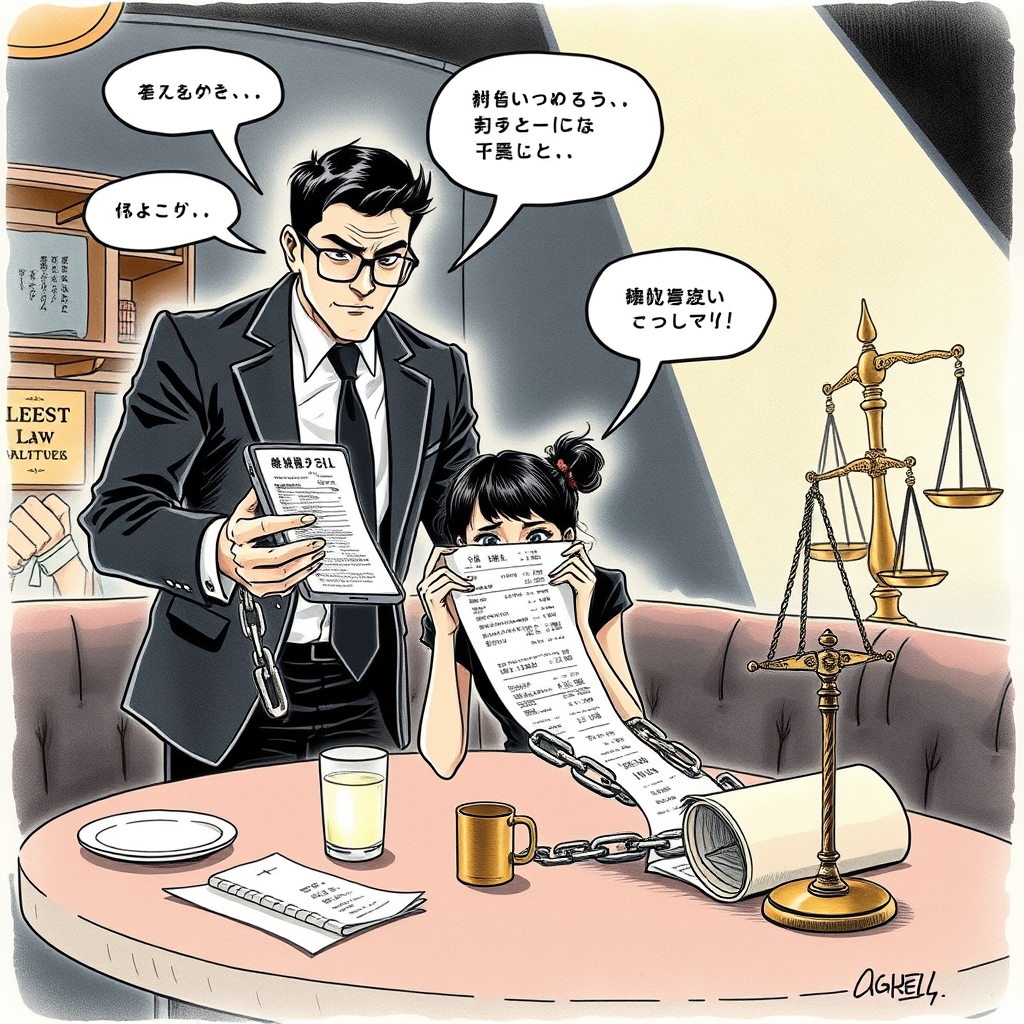
How the Case Unfolded
On June 10, 2026, the Okayama Chuo Police Station arrested a man (28) in his 20s, an employee of a host club in Kita Ward, Okayama City, on suspicion of violating the Businesses Affecting Public Morals Regulation Act, for sending intimidating messages to a female customer in order to collect the unpaid portion of food-and-drink charges (tab debt) at the host club where he worked. Sanyo Shimbun Digital, KSB Setouchi Broadcasting, RSK Sanyo Broadcasting, and others reported the case.
According to the reports, the man is alleged to have repeatedly sent intimidating messages via social media to a female customer in her 20s of a host club in Okayama City where he worked, between around 12:35 p.m. and 4:25 p.m. on September 13, 2025, in order to collect a more than 100,000-yen unpaid amount of food-and-drink charges, confounding her.
The Content of the Messages Sent
Part of what was reported by the various outlets as the messages allegedly sent to the woman read as follows.
- "Why don't you borrow from your parents and pay?"
- "Shall I come to your house to collect?!"
- "You'll get caught, same as eating without paying or fraud."
- "Want me to come over and have you write an IOU?"
Police are said to have advanced the investigation starting from a consultation by the woman. In questioning by the Okayama Chuo Police Station, the man is said to admit the allegation, saying "there is no mistake about what I did."
The Prefecture's First Application of the Revised Businesses Affecting Public Morals Regulation Act
What draws attention in this crackdown is that the revised Businesses Affecting Public Morals Regulation Act, which took effect in June 2025, was applied. This is the first crackdown in Okayama Prefecture to apply the revised Act.
As a measure against the "malicious host clubs" that had become a social problem, the revised Act newly added to the targets of prohibition and punishment certain conduct that had previously been hard to regulate. Its main pillars are as follows.
- A ban on the unjust collection of tab debt (deferred-payment "tabs")
- A ban on demanding that customers work at adult-entertainment establishments or appear in adult videos in order to repay tab debt
- Regulation of high-value solicitation that deceives customers, such as misrepresenting charges by making them develop romantic feelings
Until now, tab-debt troubles tended to be treated as a matter of civil debt collection, and cases built as criminal matters were limited. The significance of the revised Act lies in establishing a framework under which such pressure, with a backdrop of "tabs," can be cracked down on as a violation of the Businesses Affecting Public Morals Regulation Act.
Crackdowns Spreading Nationwide
Crackdowns on malicious hosts are advancing nationwide. According to the National Police Agency's announcement, people connected to malicious host clubs who were apprehended for violations of the Businesses Affecting Public Morals Regulation Act and other laws in 2025 numbered 143 nationwide. Since the revised Act took effect, arrests on suspicion of intimidation over tab-debt collection have been reported in various places as well, and this Okayama case is situated in that trend.
The factual circumstances reported include points that could still change as the investigation progresses. The arrest is at the allegation stage, and indictment or a finding of guilt has not been finalized; this should be kept in mind.
Background—The Precariousness of the "Tab" Business Model
Host-club tab debt (deferred "tab" payment) has been viewed as a problem, as a mechanism that has customers indulge beyond their ability to pay and, by saddling them with that debt, deepens their dependence on the shop and their assigned host. Cases in which a female customer pressed for repayment is, as a result, driven into working at an adult-entertainment establishment have become a social problem, and the revised Businesses Affecting Public Morals Regulation Act precisely aims to break this chain.
On the other hand, the tab itself does not immediately become illegal; the targets of regulation are specific acts such as "unjust collection" and "demands to work in sex work or appear in adult videos." Where exactly "intimidation" subject to punishment begins will be judged in each individual case, and the accumulation of future crackdowns and judicial judgments is expected to shape the standards for the law's operation.
How much real effectiveness will the new brake of the revised Act have against the nighttime-district business model of binding customers through romantic feelings, money, and "tabs"? This case, the first application in a regional city, can be called one touchstone for that.
This article is compiled from reporting by Sanyo Shimbun Digital, KSB Setouchi Broadcasting, RSK Sanyo Broadcasting, Livedoor News, and others. Specific facts are based on the respective reports, and points of discrepancy or that remain unconfirmed are noted with reservations in the body of the text. The arrest is at the allegation stage, and guilt has not been finalized.