A Flat Rate That Wasn't
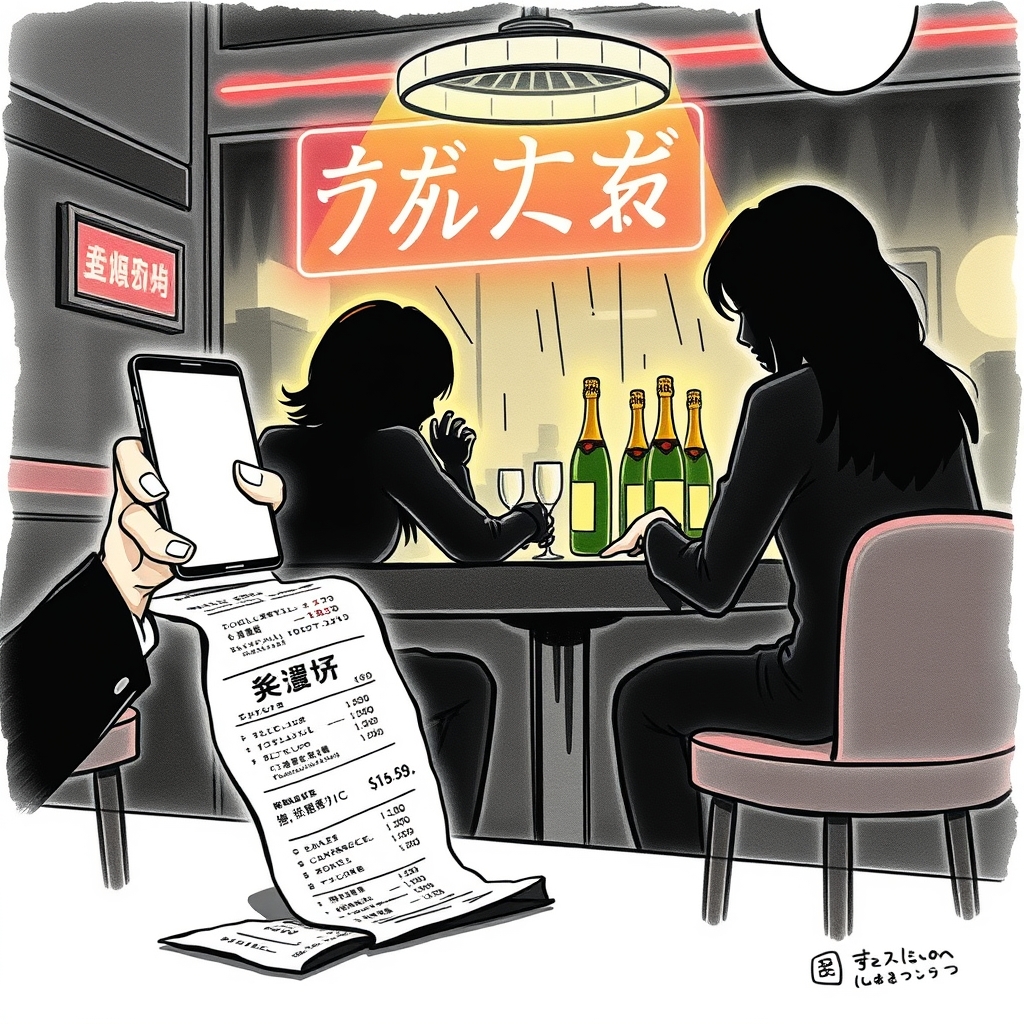
The advertised price was simple: 10,000 yen, all in—"ichiman-en pokkiri," a flat-rate come-on used across Japan's nightlife districts. What a woman in her twenties actually paid, according to Shizuoka Prefectural Police, was more than 100,000 yen.
On July 7, 2026, police arrested a 22-year-old host who works at a club in the Aoi Ward of Shizuoka City, accusing him of intimidating that first-time customer into running up her tab. According to the police account reported by local broadcasters, the host took the woman's smartphone and pressed her with words to the effect of "order more," keeping her ordering drinks and paying charges she had not expected.
Investigators say the incident took place in late May 2026. The woman later went to police, and the case was built from her complaint.
The reported details are allegations at the investigative stage. Police have not disclosed whether the man admits or denies the accusation, and his name has not been made public. No indictment or finding of guilt has been established.
Why This Arrest Is a First
The charge is what makes the case notable. Police are treating it as the first arrest in Shizuoka Prefecture under the intimidation provisions of the revised fuei-ho (Fuzoku Eigyo-ho, formally the Businesses Affecting Public Morals Regulation Act), the amendment that took effect in June 2025.
That amendment was written with host clubs squarely in view. Over the preceding years, a wave of complaints described young women lured in by cut-rate first-visit offers, then steered into enormous bills—sometimes tens or hundreds of thousands of yen—through high-pressure sales on the floor. In the worst-documented cases, women who could not pay were pushed toward "urikake," a running debt to the club, and then toward sex work to clear it. The pattern acquired a label in the Japanese press: the "akushitsu hosuto," or malicious-host, problem.
The revised law responded by making it an offense for these businesses to use intimidation to get customers to order or to pay. Where the old framework leaned on general consumer or fraud statutes, the amendment gave police a purpose-built tool aimed at the sales tactic itself. The Shizuoka case is an early test of that tool in the field: not a debt-and-prostitution prosecution, but a charge built directly on the alleged act of coercion inside the club.
The Alleged Conduct
According to the reports, the sequence was straightforward. The woman came in on the strength of the 10,000-yen flat-rate pitch. Once she was seated, the host is alleged to have taken her phone—cutting off her easiest route to check the time, call for help, or simply leave—and to have pressed her to keep ordering. By the time she left, the reported bill had climbed into the low six figures in yen, well above what she had been promised.
Taking a customer's phone is a small detail with outsized legal weight. It converts an ordinary hard sell into something a court can read as intimidation and confinement of choice, which is precisely the ground the revised law was meant to cover.
Police visited the club to make the arrest on July 7, according to one broadcaster's account, on the expectation that the host would be working that day.
A Local Case in a National Campaign
The Shizuoka arrest lands inside a broader push that has run through 2026. Authorities across the country have moved against host-linked exploitation from several directions at once—prosecuting clubs over the debt-to-prostitution pipeline, pursuing the scout groups that funnel indebted women into the sex trade, and, now, invoking the revised fuei-ho against the sales tactics at the source.
That layered approach reflects a judgment visible in official conduct this year: that the host-club problem is not a matter of isolated bad actors but of a business model whose incentives point toward squeezing customers. Prefectures have generally reached first for the highest-profile targets—large clubs, organized scout networks—so a first-of-its-kind arrest in a regional prefecture like Shizuoka signals how far down the enforcement priority the revised law is now reaching.
For the woman at the center of the case, the mechanics were mundane and the outcome was not. She answered an ad for a 10,000-yen night out and, on the police account, could not get her phone back until she had paid more than ten times that.
Whether the allegation holds will be determined in the course of the investigation and any trial. As with any arrest, the suspect has not been convicted, and the account so far is the authorities'.
This article is compiled from reporting by Shizuoka Broadcasting System (SBS), Television Shizuoka (TV Shizuoka) and Shizuoka Asahi Television, carried via Yahoo! News Japan. Facts are attributed to those reports. The suspect has not been named by police; monetary figures ("tens of thousands" over an advertised 10,000-yen flat rate) are given as reported. Points that remain unconfirmed are noted as such.