Three Shops, One Building
Osaka police have shut down three pink salons operating side by side in a building outside Kyobashi Station, one of the city's busiest nightlife hubs.
The Osaka Prefectural Police said on October 21 that they had arrested 16 men and women connected to the shops on suspicion of public indecency, according to Sankei Shimbun and Yomiuri Telecasting (YTV). Among them is the shops' 58-year-old de facto operator, a resident of Osaka's Joto Ward. YTV reported that the 16 include staff and customers, and that some have already been released while the investigation continues on a voluntary basis.
The three shops are in Katamachi, Miyakojima Ward. YTV identified them as Jan☆Jan, CANDY SPLASH and Honey BunBun. Police raided the building on October 20 with about 140 officers, YTV said. The case was handled by the prefectural police's Community Safety Special Investigation Unit, according to Sankei.
All of those arrested have admitted the allegations, both outlets reported. YTV quoted the operator as telling investigators, "Everything is as stated."
Why "Public" Indecency
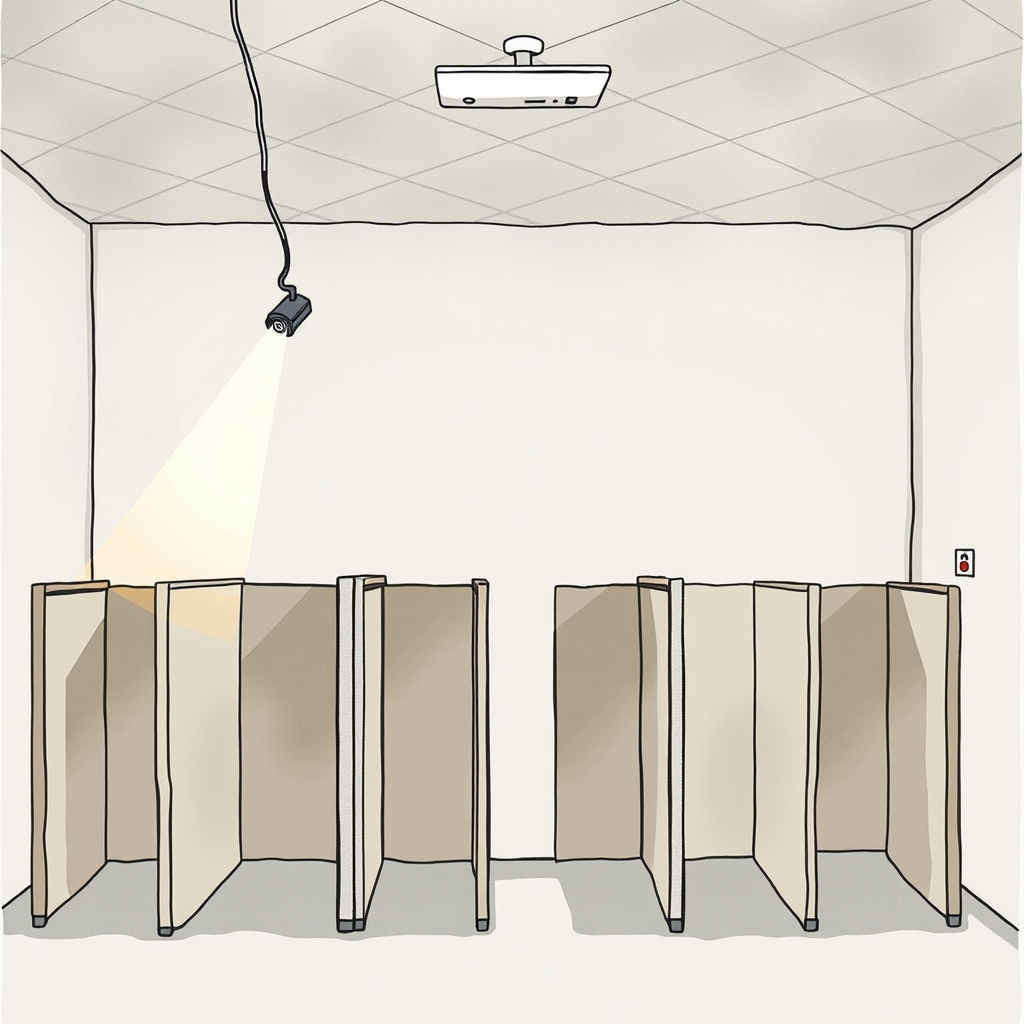
The charge turns on the layout. Each shop had six or seven service booths separated by partitions about one meter (3 feet) high, with no doors, according to both outlets. Police said anyone looking in could easily see customers who had been undressed from the waist down and were receiving sexual services. On that basis, investigators concluded that the acts were "public" under the Penal Code.
Under Article 174 of the Penal Code, public indecency carries up to six months in prison or a fine of up to 300,000 yen, or lesser penalties of short detention or a petty fine.
Pink salons, known in Japan as pinsaro, offer sexual services short of intercourse in open-plan rooms. Most cannot obtain the license that the fuei-ho (Businesses Affecting Public Morals Regulation Act) requires for storefront sex businesses, since that law bars new storefront shops in most of the country. Police often reach such shops through the public-indecency statute instead, as they did here. Neither outlet reported fuei-ho charges in this case.
According to Sankei, the operator is accused of conspiring with employees to have customers expose themselves and commit indecent acts at the three shops between July and October. YTV gave the date of the alleged conduct as August. The shops advertised rates such as 3,500 yen for 20 minutes on their website, Sankei said.
A Manual for When Police Arrive
Investigators described an operation built to see police coming.
The shops had security cameras at the building's entrances and emergency stairwell, and a lookout posted out front, YTV reported. On weekdays they turned customers away between 6:20 p.m. and 7:50 p.m., a window they believed police inspections were most likely to happen.
Police also found what they called a "police manual." According to YTV, it told staff to flash the lights to warn others when police arrived and to tell customers to get dressed. Sankei reported that two quick switches of the lights off were the signal to stop services.
On October 20 the system failed. The shops noticed the raid too late, and no one flashed the lights, YTV said.
The Money
The operator and staff told police that each shop drew about 100 to 150 customers a day and that the three shops together took in about 500 million yen (roughly $3.3 million) a year, according to both outlets. YTV reported that police found about 28 million yen in cash at the operator's home.
Police are investigating whether any of the proceeds went to organized crime groups, YTV said.
The case began with a tip. In December 2025, someone told police that a building in front of Kyobashi Station housed pink salons offering illegal sexual services, both outlets reported.
Why It Matters
Kyobashi, on the JR Loop Line where Osaka's eastern wards meet, has long been a center for budget nightlife. The case shows the volume these low-cost, high-turnover shops can handle: by the operators' own account, up to 450 customers a day across three shops in a single building.
It also shows the legal route Osaka police chose. They did not use the licensing law. They used the open booths themselves and built the case on public indecency, a charge that reached customers as well as staff.
Sources: Sankei Shimbun, October 21, 2026, 2:32 p.m., for the arrest count, the shop layout and partitions, the July–October conduct alleged, the 20-minute rate, the lights-off signal, the sales statement and the December tip. Yomiuri Telecasting (YTV), October 21, 2026, 1:16 p.m., for the shop names, the October 20 raid by about 140 officers, the inclusion of customers among those arrested, the cameras, lookout and weekday closing window, the "police manual," the cash found at the operator's home and the organized-crime inquiry. Both reports were carried on Yahoo! News Japan. The outlets differ on the period of the alleged conduct (July–October in Sankei, August in YTV). Both outlets named the operator; this site does not. Penalties are from Article 174 of the Penal Code. The dollar figure is an approximate conversion. Glossary: pinsaro = pink salon; fūei-hō = Businesses Affecting Public Morals Regulation Act. An arrest is not a finding of guilt.