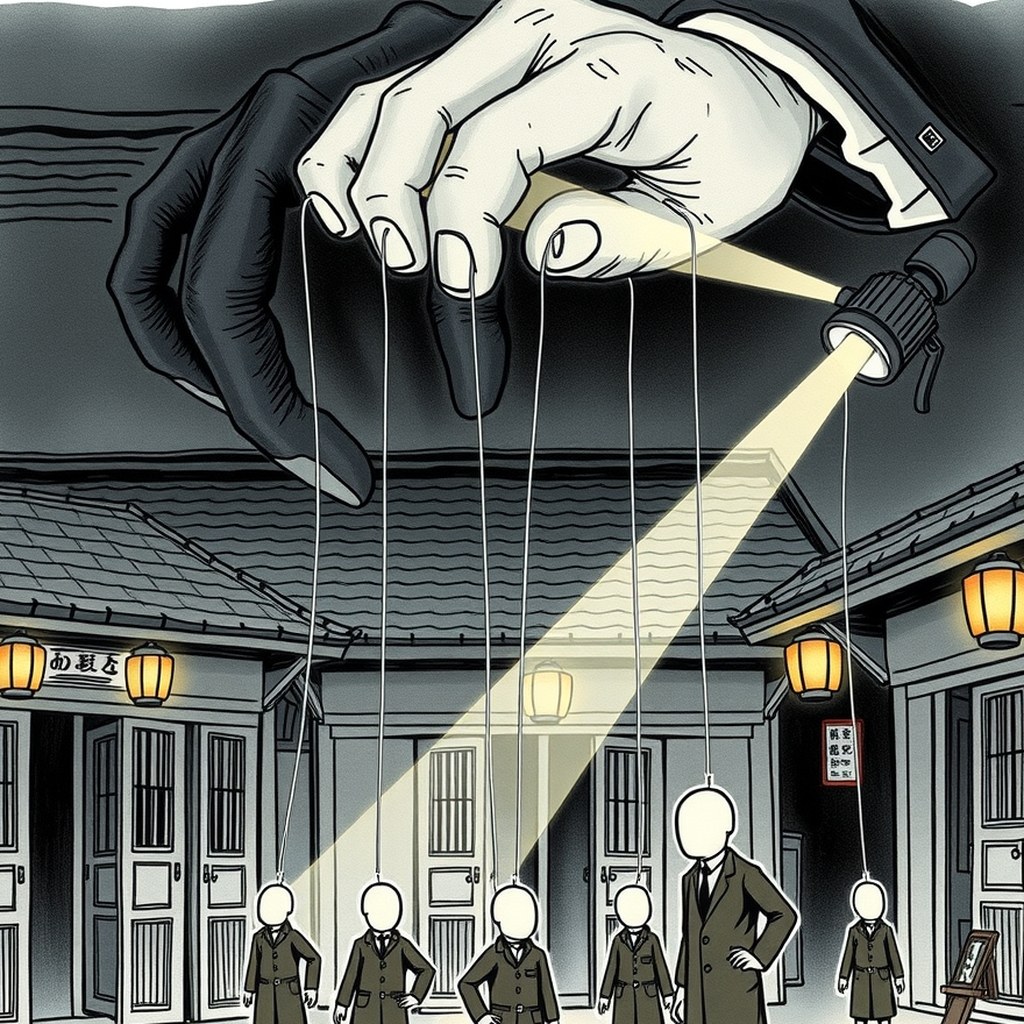
Another Yoshiwara Raid
Tokyo's Metropolitan Police Department has moved against two more soaplands in Yoshiwara, the city's oldest red-light district, in Taito Ward. On Monday, October 5, 2026, officers arrested nine people. They include the general manager of a soapland called Aile D'ore (エルドール) and the manager of a second shop, Danshaku (男爵, "Baron"). Fuji TV's FNN, Nippon Television's NNN and TBS's JNN reported the arrests on October 7.
All nine are suspected of violating the baishun bōshi-hō, the Anti-Prostitution Act. Police say they knowingly provided private rooms inside the shops where female employees had sex with customers for money.
Investigators believe the two shops took in about ¥5 billion (roughly $33 million) combined. TBS put that figure over five years and NTV over six. Police are also examining the shops' ties to scout groups, the recruiters who supply women to the sex trade.
The Case at a Glance
| Shops | Aile D'ore and Danshaku, soaplands in Yoshiwara, Taito Ward, Tokyo |
| Arrested | 9, including Aile D'ore's general manager (54) and Danshaku's manager (53) |
| Arrest date | October 5, 2026 |
| Suspected offense | Providing a place for prostitution (Anti-Prostitution Act) |
| Estimated sales | About ¥5 billion for both shops (5 years per TBS; 6 years per NTV) |
| Statements | 8 admit the allegations and 1 denies them (TBS) |
| Origin | An April 2026 tip that a shop was paying scout groups (FNN) |
A Tip About Scouts
FNN reported that the case began in April. Police received information that "a shop is paying rewards to a scout group."
Aile D'ore had 23 women on its roster, FNN said. Police believe most of them came to the shop through scout referrals. FNN reported that the 54-year-old general manager has admitted the allegations. He reportedly told investigators that the shop "had trouble securing staff, so it used scouts."
TBS reported that eight of the nine admit the allegations and one denies them. According to TBS, the eight told police that "almost all of the female employees were introduced to us through scouts." NTV said both managers admitted the charge and said they had "used scouts."
TBS also reported that police suspect the shops paid the recruiters scout-backs. A scout-back (sukauto bakku) is a referral fee a sex business pays a recruiter for each woman placed there, often as a recurring cut of her earnings. NTV said police are investigating links to illegal scout groups.
Officers also searched the shops, FNN reported. Police have not said which scout group may be involved. The outlets did not report any separate charge over the referral payments.
Why the Scout Angle Matters
Since June 28, 2025, paying a scout-back has been illegal under the amended fūei-hō, the Businesses Affecting Public Morals Regulation Act. The fūei-hō licenses and polices Japan's nightlife and sex businesses. The amendment targeted a pipeline that ran from host-club debt to sex work: a woman runs up a large tab, and a recruiter places her in a shop to pay it off.
Scout groups have been under heavy police pressure since then. Last month, operators told FRIDAY Digital that kickback rates had gone up, not down, after the ban, and that anonymous criminal groups had taken over much of the recruiting. That was covered in this site's report of September 14. The Yoshiwara case suggests police are now using prostitution charges against shops to get at the recruiters behind them.
A Year of Pressure on Soaplands
Soaplands are bathhouse-style businesses that have operated openly for decades. They rely on the idea that any sex is a private arrangement between the worker and the customer. The Anti-Prostitution Act does not punish selling or buying sex itself. It does punish third parties who profit from it, including anyone who knowingly provides a place for it.
In 2026, police across Japan have used that "place-provision" clause against soaplands. Cases have been reported in Sendai, Niigata, Wakayama and Matsuyama. In June, Tokyo police raided Louvre, a Yoshiwara shop that had operated for 43 years. The Mainichi Shimbun cited a police estimate of about ¥5.55 billion in sales since 2018. A former worker's criminal complaint helped start that case.
Police in Japan can hold a suspect for up to 23 days after an arrest while prosecutors decide whether to file charges.
Sources: FNN Prime Online / Fuji TV (October 7, 2026) for the shop names, the two managers' ages and titles, the October 5 date, the April tip, the 23-woman roster, the manager's quoted statement and the searches; Nippon Television NNN (October 7, 2026) for the "Aile D'ore" spelling, the six-year sales figure, both managers' admissions and the illegal-scout-group investigation; TBS NEWS DIG / JNN (October 7, 2026) for the five-year sales figure, the 8-1 split on admissions, the "almost all" statement and the scout-back allegation. The outlets named the two managers; this site does not, because the official readings of their names have not been published. Background on the 2025 scout-back ban comes from this site's September 14, 2026 report, and background on the Louvre case comes from its July 27, 2026 report. Dollar figure converted at about ¥150 to the dollar. Glossary: baishun bōshi-hō = Anti-Prostitution Act; fūei-hō = Businesses Affecting Public Morals Regulation Act; sukauto bakku = scout-back, a recruiter's referral fee. No one has been charged or convicted in this case, and all allegations are unproven until a court rules.